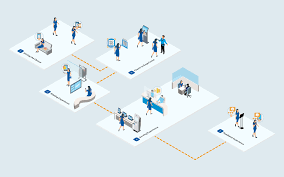
In today’s service-driven economy, waiting in line has become one of the most significant sources of customer frustration. Long queues, disorganized waiting areas, and uncertainty about service times can damage brand reputation and drive customers away. A modern queue management system addresses these challenges by transforming chaotic waiting experiences into organized, efficient, and even pleasant interactions. Across Pakistan’s major cities, businesses and government institutions are embracing queuing technology to enhance customer satisfaction and operational efficiency.
Queue Management System in Rawalpindi
Rawalpindi, a bustling city with deep historical roots and a thriving commercial landscape, has seen rapid adoption of queuing technology across its service sectors. The demand for a reliable queue management system in Rawalpindi has grown as banks, government offices, hospitals, and retail centers recognize the need to manage increasing customer volumes efficiently.
In Rawalpindi’s busy commercial districts, service providers face unique challenges. High customer traffic at banks, NADRA centers, passport offices, and healthcare facilities requires queuing solutions that are both robust and user-friendly. Modern queue management systems deployed in Rawalpindi incorporate multilingual interfaces and intuitive ticketing kiosks that cater to the diverse population.
Government entities in Rawalpindi have been early adopters of queue management technology. Civic centers, utility bill collection offices, and property tax departments have implemented these systems to reduce chaos, eliminate favoritism, and ensure fair, orderly service delivery. The result has been shorter wait times, reduced stress for both staff and citizens, and improved overall satisfaction with government services.
The healthcare sector in Rawalpindi has also benefited significantly. Major hospitals and clinics use queue management systems to manage patient flow across multiple departments, reducing overcrowding in waiting areas and improving the patient experience. Integration with electronic health records allows seamless coordination between registration, consultation, pharmacy, and laboratory services.
Queue Management System in Lahore
Lahore, Pakistan’s cultural and historical heart, is also a major commercial and industrial hub. The city’s vibrant business environment has created strong demand for efficient queue management system in Lahore solutions. From the bustling banks on The Mall to the crowded retail centers in Gulberg and DHA, organizations are investing in queuing technology to enhance customer experience.
Lahore’s banking sector has embraced queue management with particular enthusiasm. With numerous branches across the city handling thousands of customers daily, banks utilize integrated queuing systems that combine ticket management with customer relationship management. This allows staff to identify premium customers, provide personalized service, and track service history for continuous improvement.
The retail landscape in Lahore has also transformed with queue management adoption. Large shopping malls, hypermarkets, and brand outlets use these systems to manage customer flow during peak hours, especially during sale seasons and festive periods. Virtual queuing features allow customers to browse while waiting for their turn, enhancing the shopping experience.
Lahore’s educational institutions, including universities and colleges, have implemented queue management systems for administrative offices, registration centers, and library services. This has significantly reduced wait times for students and staff, improving overall campus efficiency.
Queue Management System in Karachi
Karachi, Pakistan’s economic powerhouse and largest city, presents unique challenges for service delivery. With a population exceeding 20 million, managing customer queues efficiently is critical for businesses and government institutions. The demand for advanced queue management system in Karachi solutions has surged as organizations seek to handle high volumes while maintaining service quality.
Karachi’s diverse service landscape requires flexible queuing solutions. Banks, telecommunications centers, utility companies, and healthcare facilities across the city handle massive daily footfall. Modern queue management systems deployed in Karachi feature robust hardware capable of withstanding high usage, cloud-based analytics for multi-branch monitoring, and integration with mobile platforms for customer convenience.
The healthcare sector in Karachi has witnessed significant transformation through queue management implementation. Major hospitals like Aga Khan University Hospital, Liaquat National Hospital, and Civil Hospital utilize these systems to manage thousands of patients daily. Multi-specialty clinics and diagnostic centers have also adopted queuing technology to streamline patient flow and reduce waiting times.
Karachi’s government service centers, including passport offices, NADRA centers, and civic agencies, have implemented queue management systems to bring order to previously chaotic environments. Digital ticketing, display screens, and audio announcements have transformed these facilities into organized, efficient service centers that citizens can navigate with ease.
The Next Gen Technologies: A Top Company for Queue Management Solutions
When organizations seek reliable, innovative queue management solutions across Pakistan, The Next Gen Technologies stands out as a top company dedicated to delivering excellence. With a reputation built on quality, technical expertise, and customer-centric service, The Next Gen Technologies has become a trusted partner for businesses and government entities across Rawalpindi, Lahore, Karachi, and beyond.
Their comprehensive portfolio includes state-of-the-art queue management systems tailored to diverse industries, including banking, healthcare, retail, government services, hospitality, and telecommunications. The Next Gen Technologies combines superior hardware with intuitive software platforms, providing clients with complete solutions that are easy to implement, manage, and scale.
For organizations requiring specialized queue management system in Rawalpindi, queue management system in Lahore, or queue management system in Karachi, The Next Gen Technologies offers solutions designed to meet local market demands. From multilingual interfaces to robust hardware capable of withstanding high usage, their systems are built for reliability and performance in Pakistan’s diverse environments.
By choosing The Next Gen Technologies, organizations gain access to professional installation, comprehensive training, and ongoing technical support, ensuring that their queue management investment delivers lasting value and continuously improves customer service operations.
Conclusion
Implementing a modern queue management system is a strategic investment for any organization committed to delivering exceptional customer experiences. Whether in Rawalpindi, Lahore, Karachi, or across Pakistan, these systems reduce wait times, improve operational efficiency, and enhance satisfaction for both customers and staff. With a trusted partner like The Next Gen Technologies, recognized as a top company in the field, organizations can implement solutions that transform service delivery and set new standards of excellence.
FAQs
1. What types of businesses benefit from a queue management system in Pakistan?
Queue management systems benefit a wide range of industries, including banks and financial institutions, hospitals and clinics, government service centers (NADRA, passport offices), retail stores, telecommunications offices, universities, and utility bill collection centers across all major Pakistani cities.
2. Can a queue management system support multiple languages?
Yes, modern queue management systems offer multilingual interfaces with support for Urdu, English, and other regional languages to accommodate Pakistan’s diverse customer base across Rawalpindi, Lahore, Karachi, and other cities.
3. Does the system require internet connectivity to function?
While many advanced features such as cloud analytics and mobile notifications require internet connectivity, queue management systems can operate with local network infrastructure. The Next Gen Technologies offers solutions tailored to your specific connectivity requirements.
4. How does virtual queuing work for customers?
Virtual queuing allows customers to join a queue remotely via mobile app, website, or SMS. They receive real-time updates on their position and are notified when it is time to arrive for service, eliminating the need to wait physically on-site and reducing congestion in waiting areas.
5. What kind of maintenance and support does The Next Gen Technologies provide?
The Next Gen Technologies offers comprehensive after-sales support, including regular maintenance, software updates, technical assistance, and training to ensure that queue management systems continue to perform optimally over the long term across all locations.